
Not long ago, consumer 3D printing was defined by its friction. It was a world of manual bed leveling, constant mechanical troubleshooting, and long, anxious waits for prints to finish. If you’ve spent time reading our analysis on how tech shapes the future of work, you know that the modern professional workspace demands tools that remove obstacles rather than create them. Bambu Lab stepped into this reality and completely shattered the old blueprint, transforming the 3D printer from a temperamental science project into a sleek, ultra-fast consumer appliance.
By stacking their lineup with robotics expertise and advanced automation, Bambu Lab has established itself as the fast-moving titan of desktop manufacturing. Let’s explore how this brand continues to redefine the standards of the creative community.
Shifting Focus From “Tinkering” to “Producing”
The defining characteristic of the Bambu Lab experience is its radical commitment to a “hands-off” workflow. Founded by engineering minds with a deep background in drone technology, the brand approached 3D manufacturing from a fresh perspective. They prioritized high-speed CoreXY motion mechanics right out of the gate, cutting traditional print times by up to 70% without sacrificing crisp surface quality.
Driven by Bambu Studio and the Bambu Handy mobile app, the entire printing ecosystem is unified. Users can slice a complex model on their desktop, send it wirelessly to their machine, and track its progress via an integrated camera while away from the studio. It is a level of frictionless convenience that mirrors the smart connectivity we celebrate across our deep dives into wearables and health-tech.

Hardware Built for Intelligent Autopilot
Rather than relying on user calibration, Bambu Lab utilizes a heavy array of sensors and microprocessors to handle the heavy lifting under the hood. Their hardware family scales neatly to match different creative demands while maintaining a core standard of out-of-the-box reliability.
1. The Multi-Material Advantage (AMS)
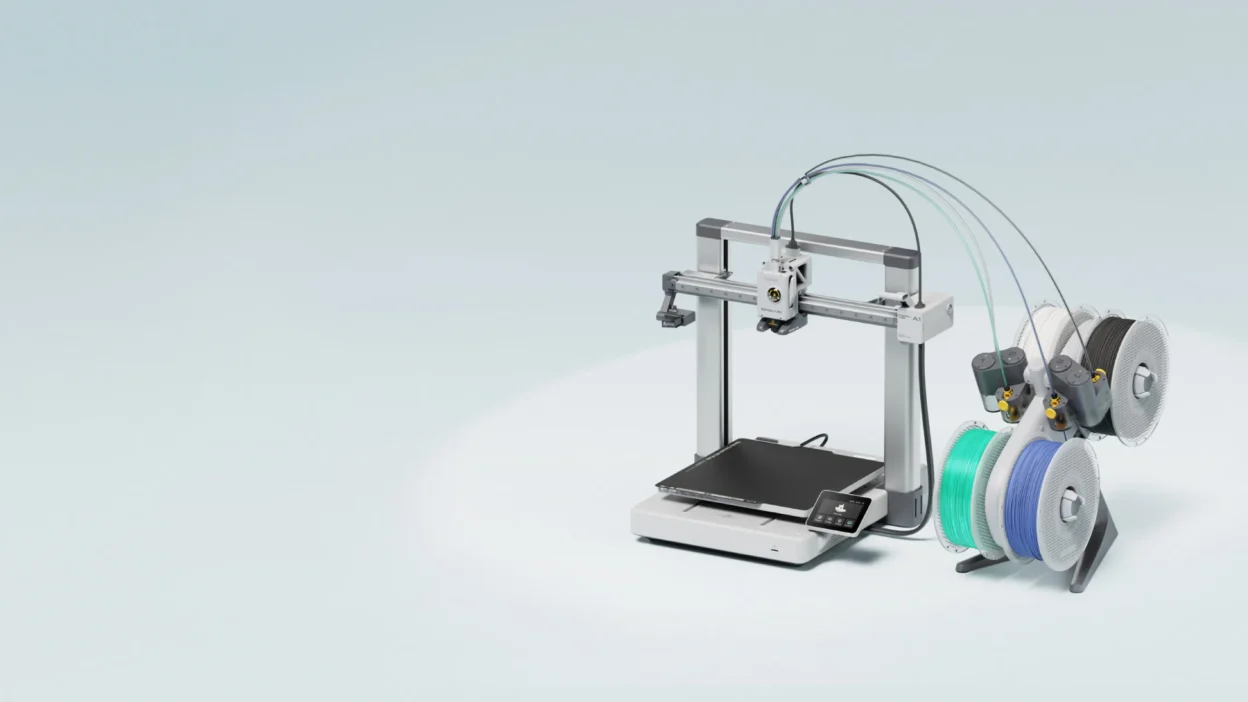
The true crown jewel of their ecosystem is the Automatic Material System (AMS). This airtight, smart-feeding hub sits directly atop enclosed workhorses like the P1S and P2S, allowing the toolhead to switch between four distinct colors or materials automatically mid-print. For creators building functional parts that require secondary dissolvable supports or stark color-coded sections, the AMS transforms multi-material manufacturing from a complex chore into a seamless background process.
2. Next-Gen Dual Extrusion and Support
As the brand pushes deeper into professional territory with flagships like the X2D, they have introduced advanced dual-extrusion systems that blend a precise direct-drive toolhead with an auxiliary rear-mounted feeding motor. This unique setup unlocks geometric freedom, allowing engineering-grade materials like Nylon and ABS to be printed alongside dedicated, clean-peeling support filaments with minimal material waste.
3. Active AI Supervision
Bambu Lab pioneered the use of Lidar sensors and machine-learning vision systems in desktop printing. The machine physically scans the first layer of a print to verify perfect adhesion before proceeding. If a filament jam or printing error occurs, the internal system catches it instantly, pauses execution, and pings your smartphone, preventing wasted material and protecting the machine’s hardware.
Balancing the Open and Closed Ecosystem
While Bambu Lab delivers arguably the most polished and reliable out-of-the-box performance in the industry, their ecosystem does reflect the classic trade-offs of premium tech. The architecture leans toward a more proprietary structure, meaning it performs at its absolute best when paired with official Bambu components and tuned filament rolls. For creators who enjoy heavily modifying their machines or swapping out custom open-source components, this closed-loop philosophy can occasionally feel restrictive.
Furthermore, driving high-flow hotends at speeds pushing 500mm/s+ requires incredibly aggressive cooling fans, meaning enclosed workshop models can generate a noticeable audio presence during intensive production runs.
The Broader Creative Spectrum
When analyzing where Bambu Lab sits in the global workspace, they are the undisputed kings of fast, high-intelligence consumer production. They provide an unmatched gateway for professionals who want a machine that simply works every time the power button is pressed.
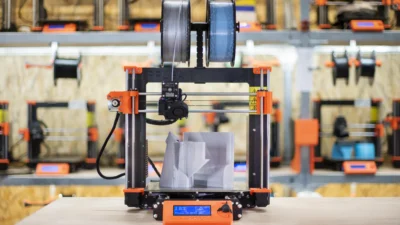
However, if your creative direction values a deeply open-source heritage, complete right-to-repair transparency, and a global community that actively encourages hardware customization from scratch, exploring the timeless ecosystem of Prusa Research remains an incredibly rewarding alternative.
The Pikaura Verdict
Bambu Lab has successfully aligned desktop manufacturing with the expectations of modern consumer tech. They have proven that high-end production gear can be both incredibly powerful and beautifully simple to use. If your goal is to build a modern, connected creator station that maximizes output and minimizes downtime, investing in the Bambu Lab ecosystem is one of the most impactful upgrades you can bring to your desk.