
If the 3D printing industry has taught us anything about how tech shapes the future of work, it is that absolute high-end features eventually become a baseline standard. While competitor ecosystems target either strict open-source purism or heavily locked-down premium appliances, Elegoo has carved out an aggressive, highly successful lane as the undisputed engine of production volume.
Known globally for building the absolute workhorses of resin (MSLA) and filament (FDM) printing, Elegoo has evolved past its roots as a pure budget alternative. Today, the brand serves as a massive smart-manufacturing disrupter, bringing industrial-scale build areas and high-speed multi-material setups down to accessible consumer economics.

The Volume Engine: Dominating Large-Format Prototyping
Elegoo’s core identity centers on erasing the physical boundaries of desktop manufacturing. Where other brands charge massive corporate premiums for a few extra inches of build space, Elegoo aggressively optimizes its supply chain to put massive print volumes into individual home studios and small design agencies.
Whether outputting massive batches of small mechanical components simultaneously or printing a single, un-segmented architectural prototype, their hardware is tuned to handle sheer physical scale without flinching. This focus on maximizing production volume directly mirrors the philosophy we explore in our deep dives into personal performance gear and wearables, where maximizing utility per footprint is paramount.

Hardware Engineered for Speed and Seamless Automation
Elegoo’s latest generation of machines completely steps away from the tedious manual calibrations of old, replacing them with a highly responsive array of intelligent internal sensors.
1. High-Resolution Smart Resin Optics (Saturn & Mars Series)
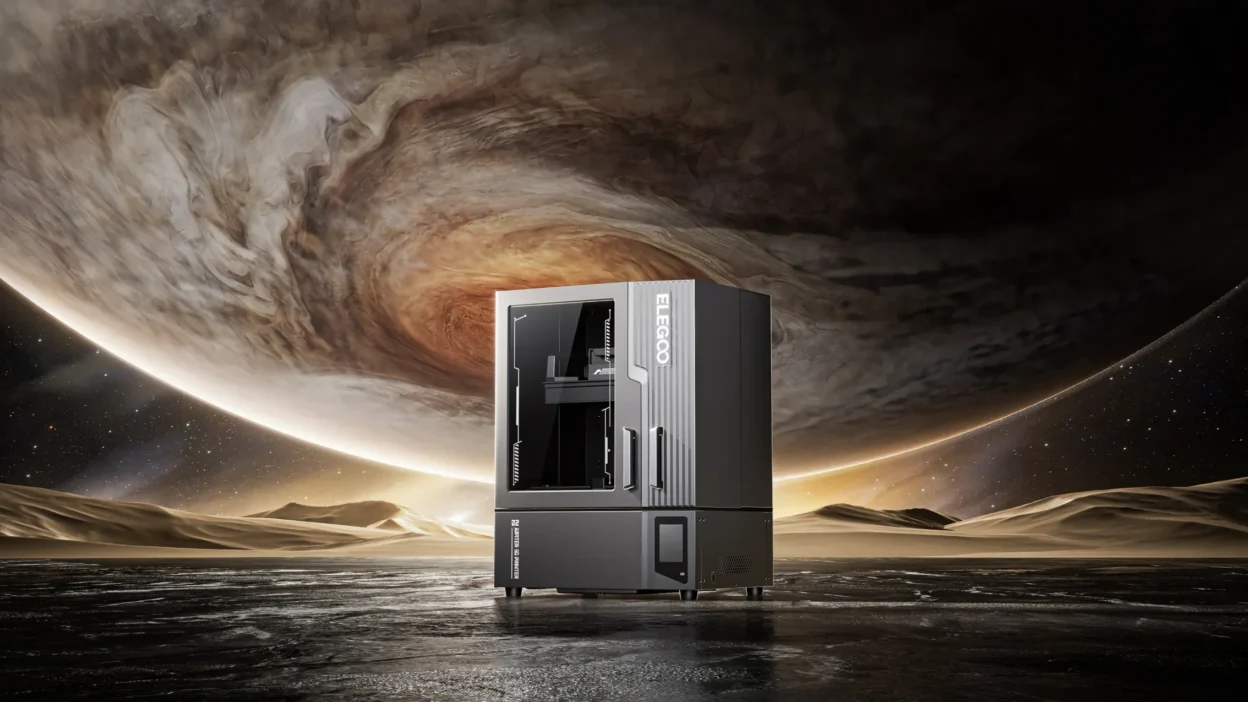
In the liquid resin space, the Saturn 4 Ultra and its companions represent a massive design leap. Moving away from standard, static-vat peeling mechanisms, Elegoo integrates a dynamic tilted-vat release system. By tilting the liquid resin tank automatically after every single layer, the vertical pull-force exerted on the model is slashed by up to 60%, drastically reducing the risk of delicate supports snapping mid-print. Combined with native 12K and 16K ultra-high-definition monochrome screens and internal load sensors for auto-leveling, execution becomes virtually hands-off.
2. High-Speed, High-Temperature CoreXY Architecture
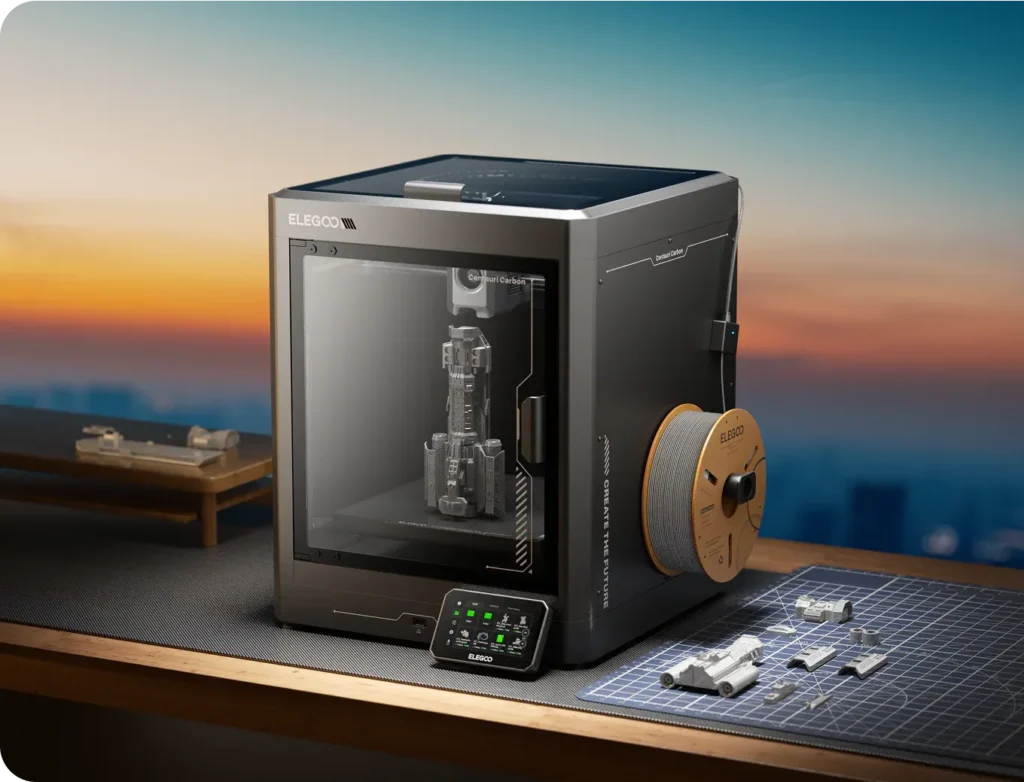
Elegoo has thrown down a serious gauntlet in the high-speed filament market with the Centauri Carbon series. Moving past basic, slow bed-slinger designs, this closed-frame architecture uses a highly rigid, integrated die-cast aluminum frame paired with a blistering CoreXY motion system. Capable of hitting accelerations up to 20,000 $mm/s^2$ and print speeds of 500 $mm/s$, the system is built with a hardened steel hotend handling temperatures up to 350°C. This lets creators confidently print high-strength, lightweight carbon fiber and nylon composites directly out of the box.
3. Wasteless Multi-Color Management
To address multi-material and multi-color printing, Elegoo introduced the Canvas system (Centauri Carbon Combo). Rather than relying on simple, slow single-nozzle purges that create dense piles of filament waste, their modern material management utilizes independent internal motor drives and automated filament cutters. The ecosystem natively handles automatic spool reloading when a roll runs empty, features knot-and-tangle detection, and uses built-in RFID tracking to instantly load optimized thermal settings for your material without manual slicing intervention.
The Software and Connectivity Horizon
To match their rapid hardware expansion, the brand utilizes a highly integrated digital backbone anchored by ELEGOO SatelLite software and the Matrix mobile app. With an array of up to 31 internal diagnostic sensors on their flagship machines, the software handles real-time nozzle clog detection, air filtration efficiency tracking, and remote camera monitoring with automated time-lapse compilation over Wi-Fi, keeping you in complete control of your print farm from anywhere.
Navigating the Trade-Offs of Mass Accessibility
Because Elegoo targets maximum feature density and physical size at highly competitive price points, users should expect a few practical trade-offs. To keep upfront costs lean, their raw out-of-the-box software slicer profiles are intentionally tuned to be conservative and safe; advanced power users will want to spend an afternoon fine-tuning acceleration curves and flow dynamics to unlock the machine’s true mechanical limits. Additionally, because their massive systems move immense structural mass at high speeds, their cooling systems and heavy-duty stepper motors require a robust, dedicated workspace table capable of dampening considerable acoustic vibration.
The Global Fleet Comparison
Within the broader creator economy, Elegoo stands as the ultimate choice for teams and makers who require extreme throughput and high feature density without an industrial invoice.
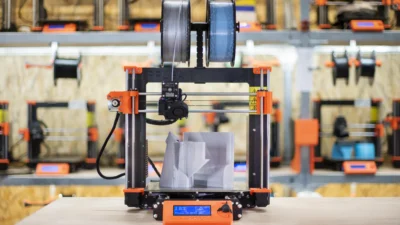
- For creators prioritizing absolute, granular right-to-repair sovereignty and an open-source hardware footprint engineered to be upgraded piece-by-piece over a decade, the timeless Prague-designed ecosystem of Prusa Research remains the industry’s ethical benchmark.
- If your studio focuses heavily on ultra-streamlined, highly automated consumer plug-and-play setups specifically split between specialized high-speed FDM and high-resolution resin output, the diverse ecosystem of Anycubic provides an exceptional parallel alternative.