
A complete guide to Prusa Research’s 3D printer lineup, exploring build quality, print performance, software ecosystem, real user experiences, and who should invest in one.
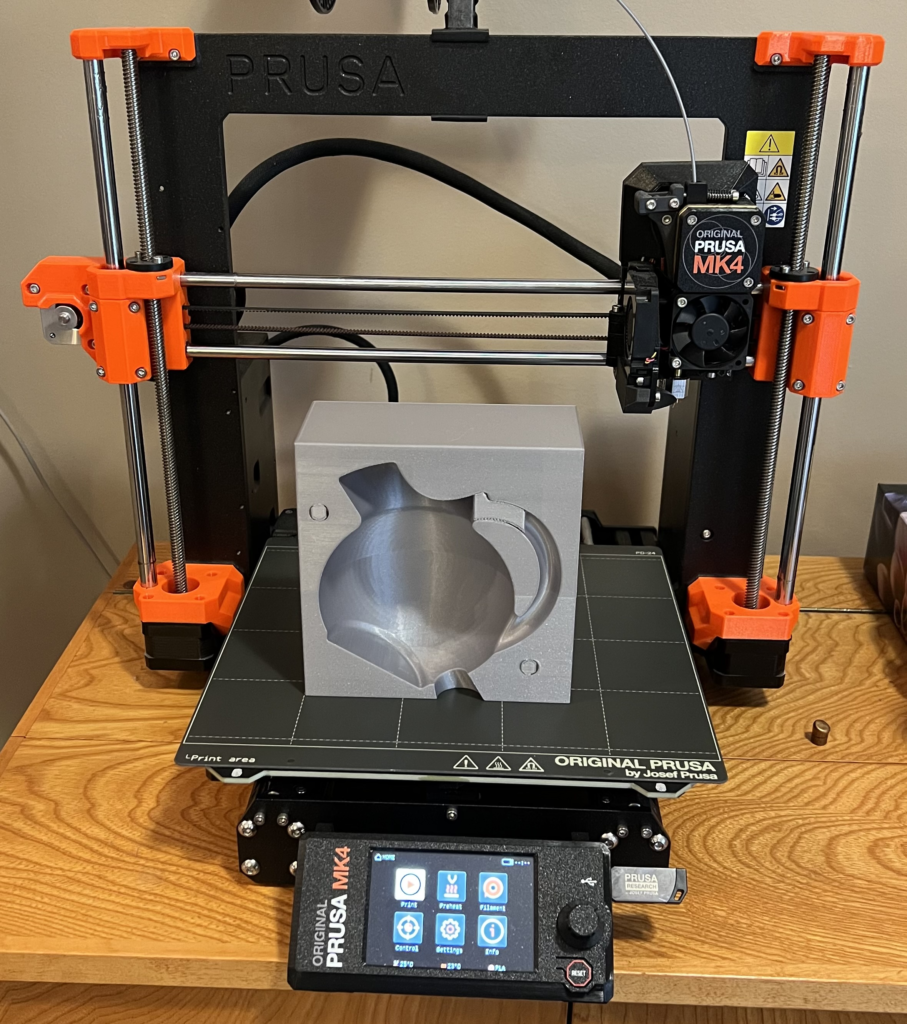
Prusa Research 3D Printers
Verdict: The benchmark brand for serious makers, educators, and professionals
Here’s how Prusa stacks up before we dig deeper:
Why Prusa Stands Out
- Legendary reliability — machines that run thousands of hours without intervention.
- Open-source roots — full repair rights, community mods, and free firmware updates forever.
- Best-in-class software — PrusaSlicer is the most tested, most trusted slicer on the market.
- Real print farm validation — every profile tested on 700+ machines running 24/7.
- Strong EU manufacturing — designed, built, and quality-controlled in Prague.
Considerations
- Premium price over budget Chinese alternatives — but the quality gap is real.
- Open-frame models look utilitarian compared to enclosed competitors.
- Some models require a separate MMU unit for multi-color printing.
- Overall: Prusa printers are the right investment for anyone who wants zero drama, measurable results, and a machine that only gets better over time.
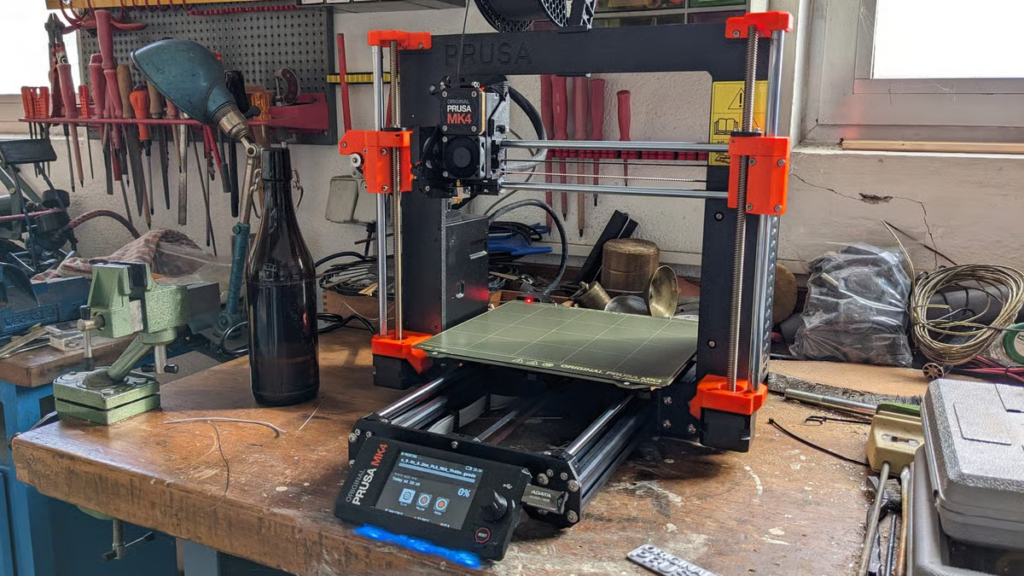
Who Is Prusa Research?
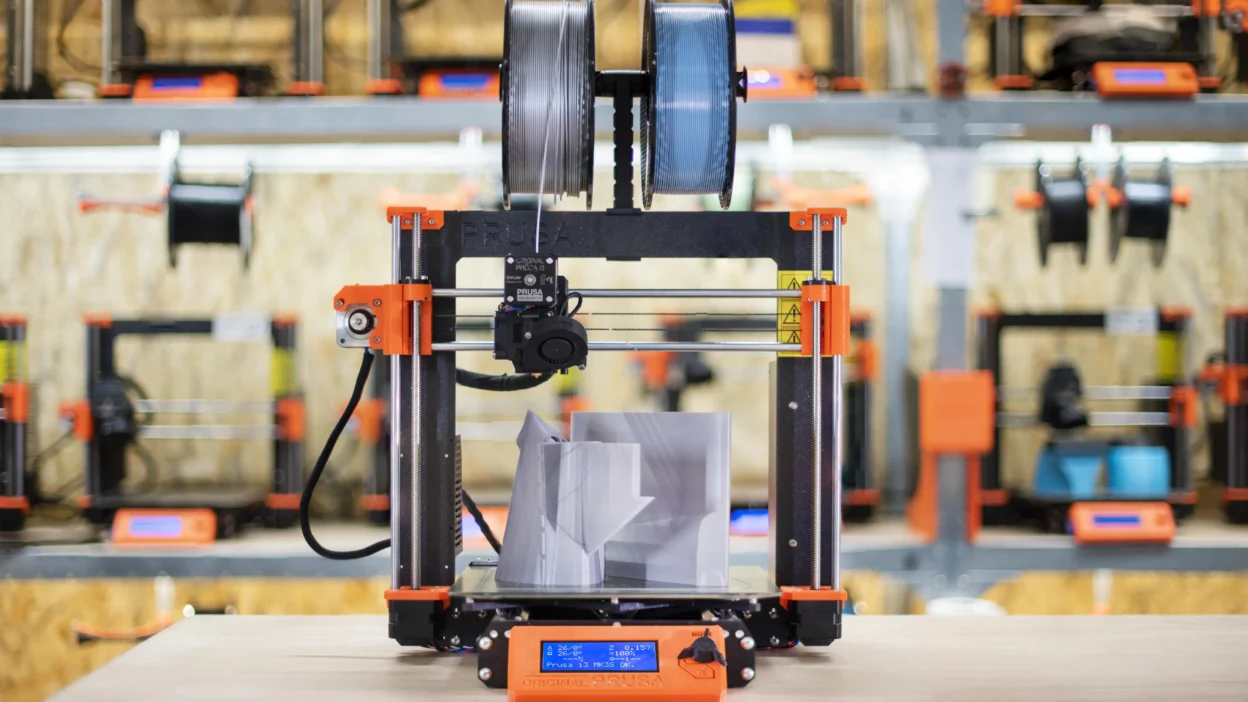
Founded in 2012 by Josef Průša — a core developer in the original RepRap open-source project — Prusa Research grew from a basement operation in Prague into one of the world’s most respected 3D printer manufacturers. The company operates a massive in-house print farm of over 700 machines running around the clock, which means every filament profile and firmware update is battle-tested before it reaches your printer.
Unlike brands that license hardware designs to distant factories, Prusa designs, manufactures, and ships directly from the Czech Republic. That vertical control shows up in print quality, customer support, and long-term reliability in ways that budget brands simply cannot replicate. (Prusa3D)
Key Features & Specifications
Automatic First Layer Calibration
The MK4S and CORE One families use a load-cell sensor built directly into the Nextruder hotend assembly. Rather than relying on manual Z-offset adjustments, the machine physically taps the nozzle against the build surface to calculate the perfect first layer automatically — every single time. For new users especially, this alone eliminates the most frustrating part of 3D printing.
360° Turbine Cooling System
The MK4S introduced a radical extruder-mounted 360° turbine cooling shroud that directs high-pressure airflow uniformly around the molten filament without blowing back onto the heating block. In practical terms, this allows steep overhangs up to 75 degrees to print cleanly mid-air — drastically cutting support material usage and post-processing time.
High-Flow Nextruder
All current Prusa FDM machines ship with high-flow brass nozzles using advanced internal geometry. These melt plastic significantly faster than standard hotends, unlocking extreme volumetric flow rates across PLA, PETG, ASA, and ABS without requiring specialty “high-speed” filament formulations.
Five-Head Toolchanger (Prusa XL)
For multi-material and multi-color work, the Original Prusa XL operates an active five-head toolchanger that physically swaps independent, pre-heated print heads in seconds. Unlike single-nozzle systems that purge wasted “poop towers” between color changes, the XL switches tools cleanly — enabling zero-waste mixing of flexible TPU, rigid carbon-filled nylon, and water-soluble support materials in one run.
PrusaSlicer & Prusa Connect
PrusaSlicer is arguably the most advanced open-source slicing platform available, with over 180 material profiles developed and validated in-house. Prusa Connect provides secure Wi-Fi fleet management, remote print monitoring, and live telemetry — with full offline operation available for studios that need local-only control.
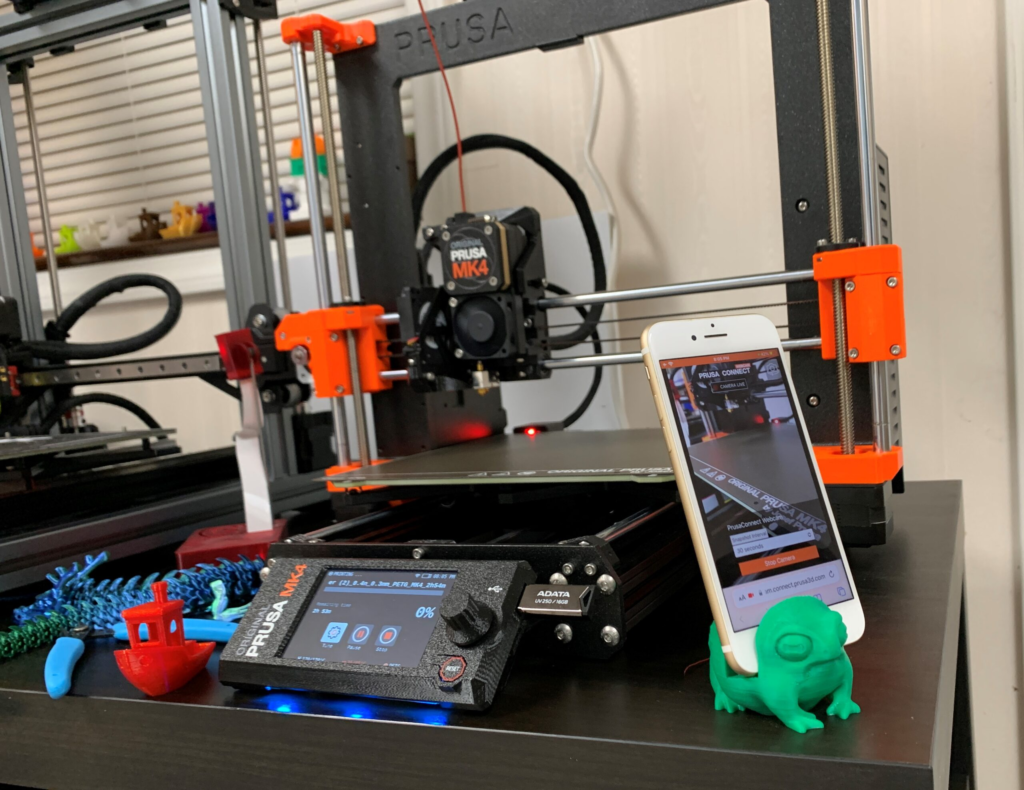
Product Lineup at a Glance
| Model | Type | Best For | Approx. Price |
|---|---|---|---|
| CORE One+ | Enclosed CoreXY | Professionals, ABS/ASA, speed | $1,099+ |
| Original Prusa XL (5-head) | Direct Drive, Toolchanger | Multi-material, large format | $1,799+ |
| Original Prusa XL (1-head) | Direct Drive, Large Format | Single-material, big prints | $1,299+ |
| Original Prusa MK4S | Direct Drive, Open Frame | Hobbyists, educators, reliability | $799 assembled / $559 kit |
| Original Prusa MINI+ | Direct Drive, Compact | Beginners, small workspaces | $459 assembled / $389 kit |
Note: Kit versions require a few hours of assembly but include the same components as assembled units — and many users say the build process itself deepens understanding of the machine.
What Real Users Say
Real makers across Reddit, Trustpilot, and the Prusa community forums consistently share the same themes: reliability, honest support, and machines that keep getting better.
Trustpilot Reviews (9,800+ Verified Buyers)
Zero issues switching from a budget printer
A buyer who came from an Anycubic Kobra 2 described the MK4S kit as trouble-free from day one, highlighting that Prusa even prints the structural parts for its own machines — a level of brand confidence that impressed them most.
🔗 Source: Trustpilot
CORE One kit arrived early, assembly instructions praised as best-in-class
A verified buyer who ordered the Core One assembly kit during a Black Friday sale said the documentation was the clearest they had ever followed, with minor pre-assembly steps already completed out of the box.
🔗 Source: Trustpilot
Prusa sent a pre-built unit at no extra cost when kit went out of stock
When a Core One+ kit ordered as a Black Friday deal went out of stock, Prusa proactively offered the pre-assembled version at the same price rather than making the customer wait.
🔗 Source: Trustpilot
Prusa Community Forums
Faultless operation for over a year
An MK4 owner with a full year of heavy printing reported zero hardware failures, and praised Prusa for firmware updates that actively made the printer perform better over time after purchase.
🔗 Source: Prusa Forum
Prusa replaced a faulty early unit, no argument
An early MK4 adopter whose first assembled unit had teething issues reported that Prusa support ran diagnostic tests, then immediately RMA’d the machine and shipped a replacement — no pushback, no charge.
🔗 Source: Prusa Forum
Community Deal Sites
“Best printer for those who value repairability”
A Slickdeals community note on the MK4S sale summarized the Prusa value proposition precisely: you pay more upfront, but you get a machine for which you can print spare parts, upgrade to newer models, and operate entirely without a mandatory cloud connection or app.
🔗 Source: Slickdeals — slickdeals.net
Expert & Industry Recognition
Prusa consistently earns top marks from the world’s most trusted tech media:
- TechRadar called the Prusa XL “unmatched in terms of accuracy and speed in its category” and named it the best large-format 3D printer of 2025.
- Tom’s Hardware called the MK4S one of their favorite 3D printers to ever hit the test bench, praising its quiet, accurate, high-speed output.
- PCMag described the MK4 as a superior pick for serious hobbyists and budding makers, calling it easy to set up while delivering top-tier print quality.
- TechRadar praised the MK4 as offering “effortlessly reliable 3D printing for everyone” — versatile, customizable, and built with open-source values intact.
Comparison With Other Desktop 3D Printer Brands
| Brand | Best For | Open Source? | Multi-Material | Avg. Reliability |
|---|---|---|---|---|
| Prusa Research | Reliability, longevity, support | Yes (partial on CORE) | Yes (MMU3 / Toolchanger) | ⭐⭐⭐⭐⭐ |
| Bambu Lab | Speed, enclosed printing | No | Yes (AMS) | ⭐⭐⭐⭐ |
| Creality | Budget, volume | Partially | Limited | ⭐⭐⭐ |
| Anycubic | Entry-level resin & FDM | No | No | ⭐⭐⭐ |
| Elegoo | Resin printing | Partially | No | ⭐⭐⭐ |
Takeaway: Bambu Lab is Prusa’s strongest competitor on speed and enclosed printing, but Prusa retains a decisive edge in long-term repairability, software transparency, and customer support — areas that matter most after the first year of ownership.
Pricing & Value
Prusa’s 3D printers range from accessible entry points to professional workhorses:
- MINI+ Kit (~$389): Compact, capable, and the lowest-friction entry into the Prusa ecosystem.
- MK4S Kit (~$559) / Assembled (~$799): The flagship workhorse that handles everything from PLA to engineering-grade filaments.
- CORE One+ (~$1,099+): Fully enclosed CoreXY architecture for ASA, ABS, and temperature-sensitive materials that need a controlled chamber environment.
- Prusa XL (~$1,299–$1,799+): Large-format toolchanger platform for professional multi-material production.
Prusa also runs periodic deals including free worldwide shipping promotions — their Spring 2026 deal covered all in-stock items with no minimum order. Filaments are available through Prusament, Prusa’s in-house brand, with strict quality tolerances (±0.02mm diameter) that feed directly into consistent print results.
Who Should Buy a Prusa Printer?
Best suited for:
- Makers who want a machine that works right out of the box and keeps working
- Educators and makerspaces needing zero-drama reliability across many users
- Engineers and designers who print functional, precise parts
- Anyone who values right-to-repair, open firmware, and long-term upgradability
- Zwift-style virtual environment users — sorry, wrong brand — studios who want local, offline operation with no mandatory subscriptions
Not ideal for:
- Users whose entire priority is the absolute lowest upfront price
- Casual users who only print a few items per month and won’t utilize the depth of the ecosystem
- Buyers who need injection-mold aesthetics over functional open-frame design
Is a Prusa 3D Printer the Right Choice for You?
Prusa Research has spent over a decade proving that the best 3D printer isn’t the fastest or the cheapest — it’s the one that’s still running flawlessly three years from now, supported by firmware updates you didn’t pay for, with spare parts you can print yourself. Whether you choose the accessible MK4S kit or scale up to the multi-material XL, you’re investing in one of the most thoroughly tested, honestly supported products in desktop manufacturing.