

Approximately 33% of Americans experience significant stress levels that affect their daily functioning, with many turning to medications or therapy for relief. Chronic stress contributes to conditions ranging from cardiovascular disease to digestive problems and sleep disorders.
Traditional stress management typically involves prescription medications like SSRIs, therapy sessions, or lifestyle modifications including meditation and exercise.
A newer approach to managing stress and anxiety involves Pulsetto, a neck-worn device that uses transcutaneous vagus nerve stimulation (tVNS) to activate the parasympathetic nervous system. The device received CE certification in 2022 and has gained over 100,000 users globally.
A recent open-label study published by the company examined Pulsetto’s effects on stress, anxiety, and sleep quality in participants using the device for four weeks.
The study included participants with chronic stress who used either bilateral stimulation (both sides of the neck) or unilateral stimulation (one side only) with the Pulsetto device.
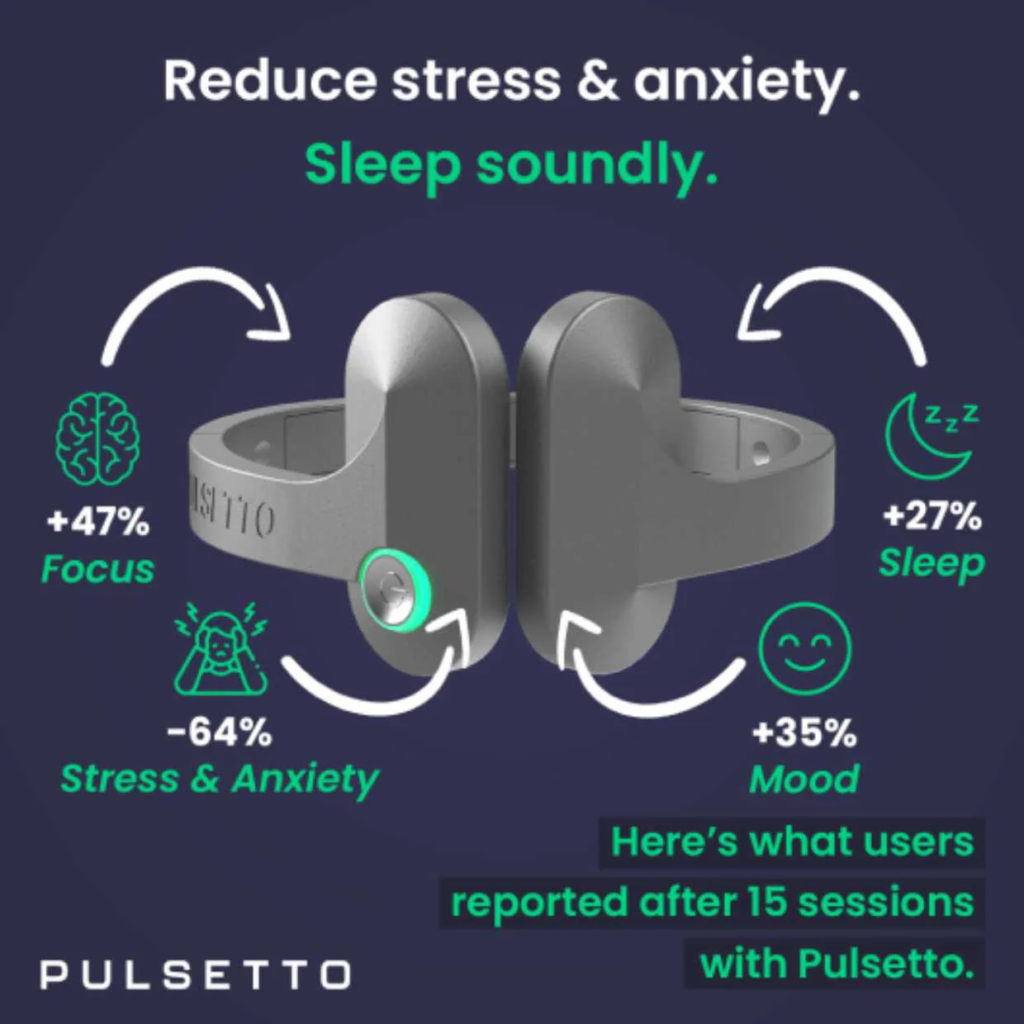
After four weeks of daily use, participants reported significant improvements in depression scores (PHQ-9), anxiety levels (GAD-7), and sleep quality (PSQI). The company also measured biological stress markers including hair cortisol and cortisone levels.
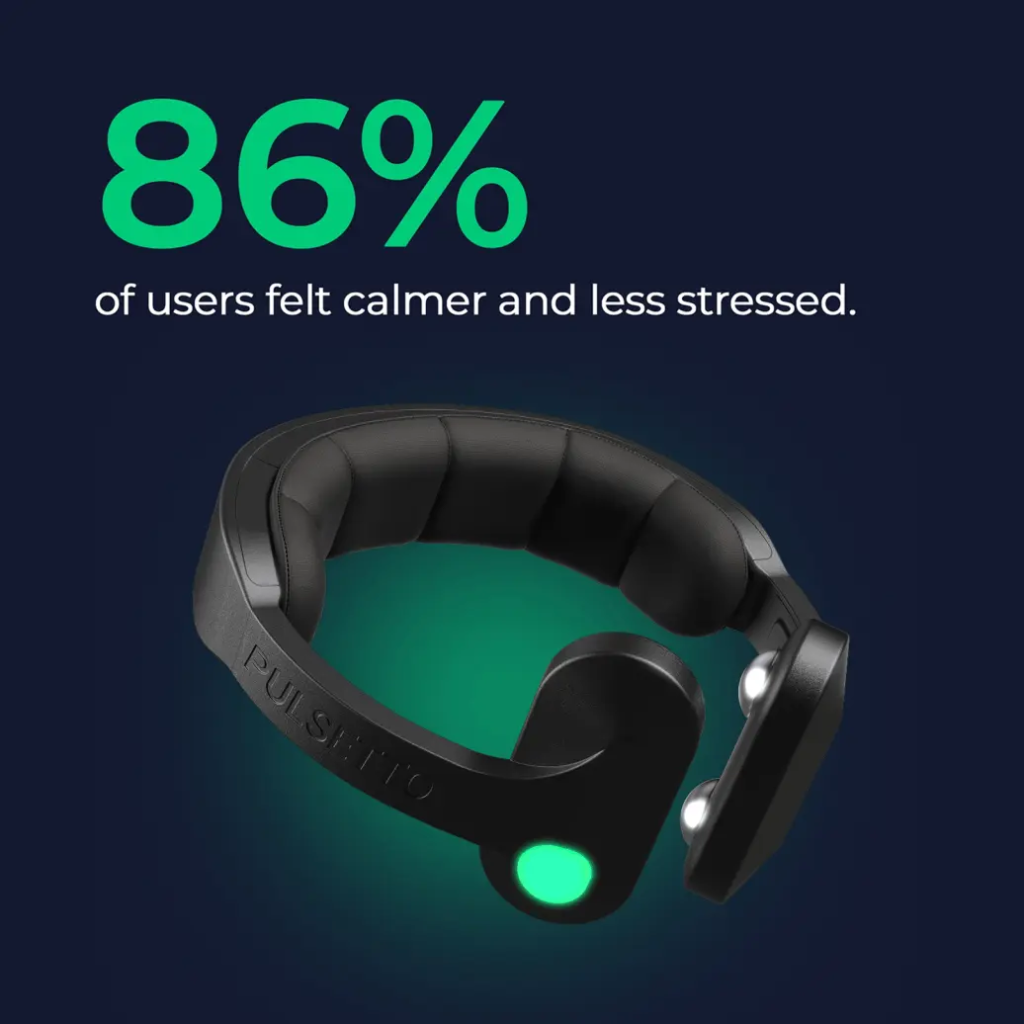
According to Pulsetto’s data, 86% of users report satisfaction with the device, though independent verification of these figures remains limited.
Key takeaways:
- Pulsetto is a non-invasive, wearable device that stimulates the vagus nerve through the neck to reduce stress and improve sleep.
- The device operates at 25Hz frequency, similar to FDA-cleared medical devices, though Pulsetto itself is not FDA-cleared.
- Users wear the device for 4-10 minute sessions, applying electrode gel to the neck for proper conductivity.
- Company-funded research shows improvements in stress and sleep, but independent clinical validation remains limited.
- The device costs $278, with ongoing electrode gel expenses of approximately $17 monthly.
How does Pulsetto work?
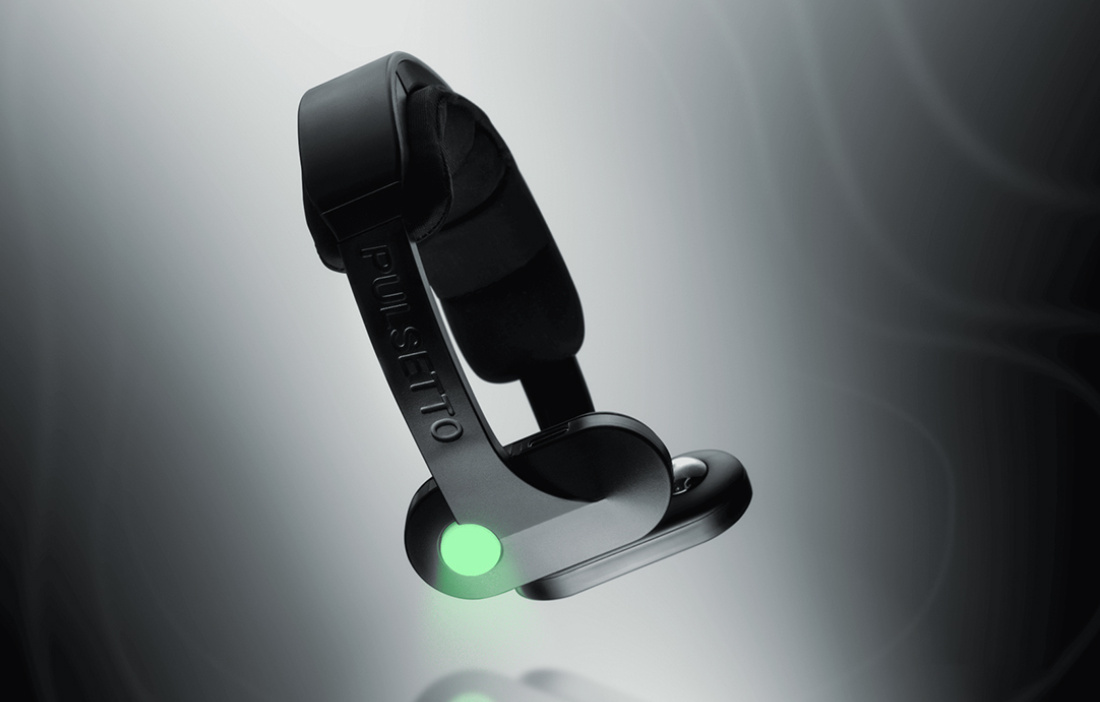
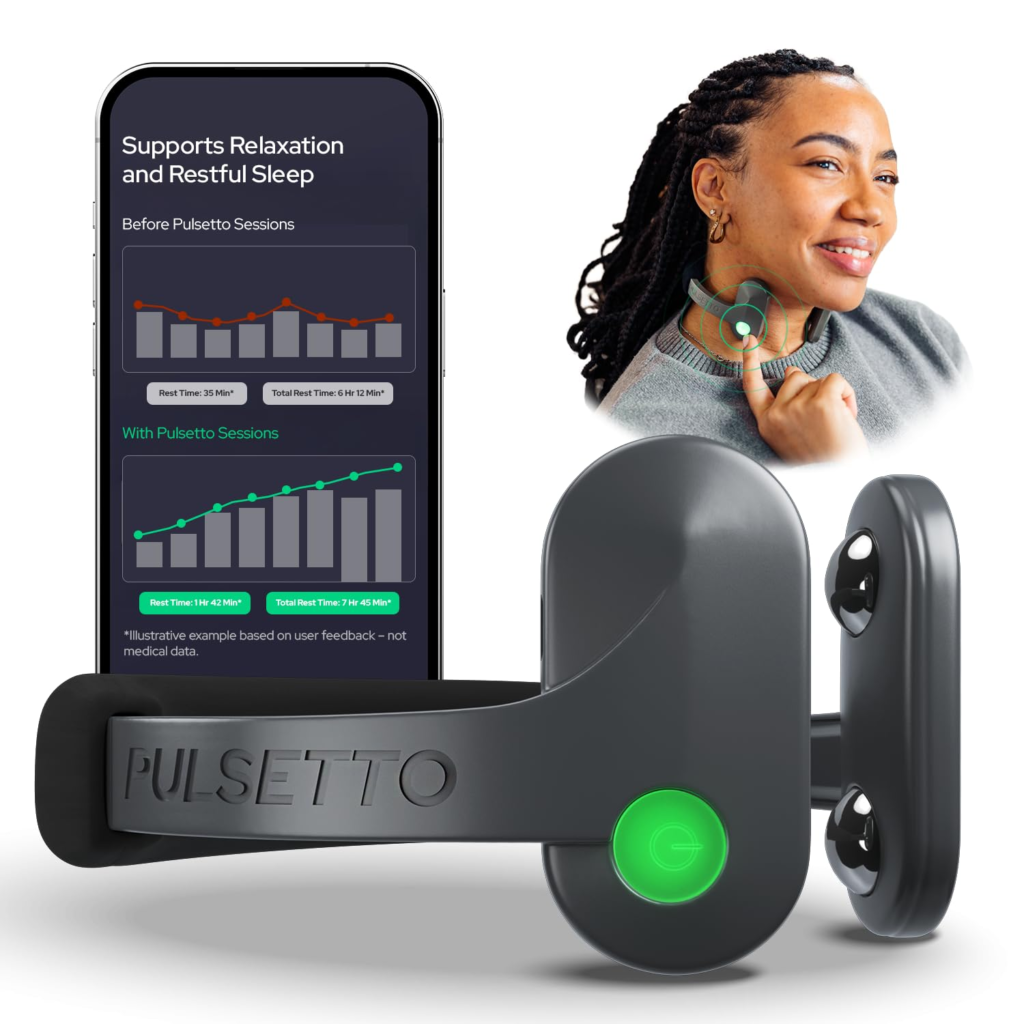
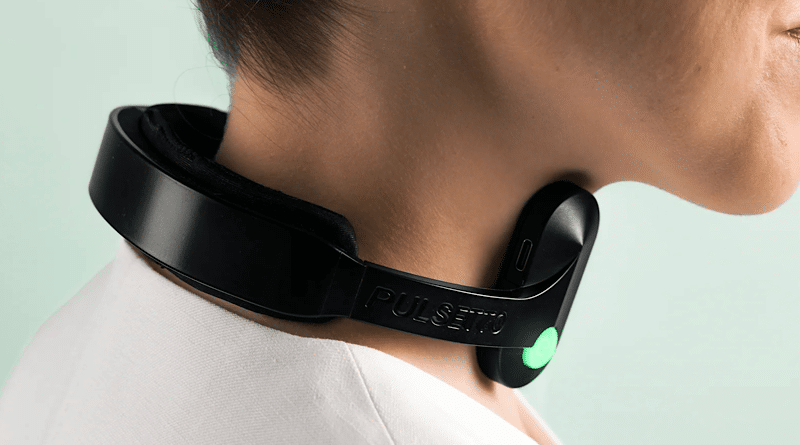
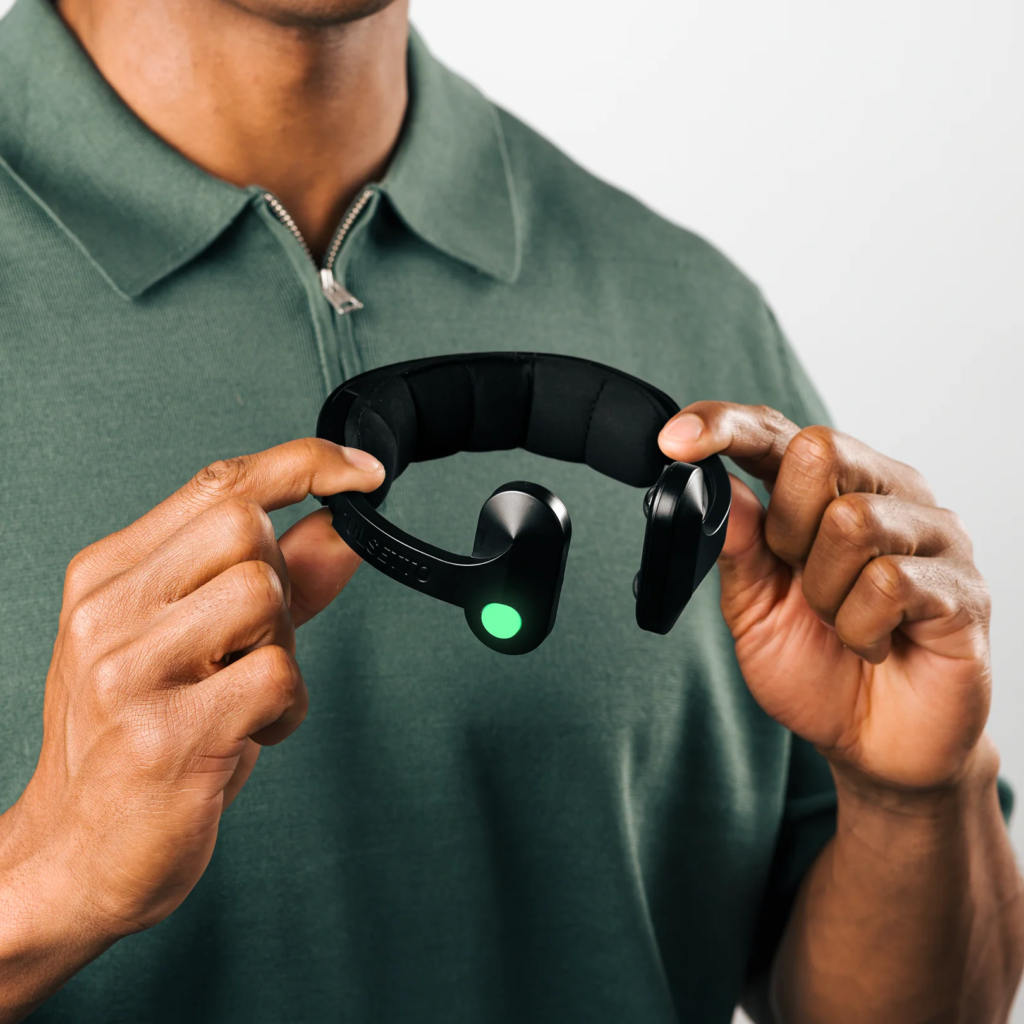
The Pulsetto device is a U-shaped silicone collar that wraps around the neck, positioning electrodes against both sides where the vagus nerve passes through the carotid sheath.
Before each use, the device must be paired with a smartphone app and electrode gel applied to either the neck or the device’s contact points. The gel facilitates electrical conductivity between the electrodes and skin.
Once activated through the app, the device delivers electrical impulses at 25Hz pulse-repetition frequency with varying pulse frequencies (4,500-5,200Hz) depending on the selected program. Users typically feel a mild tingling or vibrating sensation.
The electrical stimulation targets the cervical branch of the vagus nerve, which connects to the brainstem’s nucleus tractus solitarius. From there, signals reach brain regions involved in mood regulation, stress response, and autonomic nervous system control.
The recommended usage is five sessions per week, with each session lasting between 4-10 minutes depending on the chosen program. The device offers five built-in programs addressing stress, sleep, anxiety, burnout, and pain.
Battery life extends 8-12 days with daily use, recharging via USB-C in approximately two hours.
How effective is Pulsetto?
The primary evidence for Pulsetto’s effectiveness comes from a company-funded open-label study comparing bilateral versus unilateral vagus nerve stimulation.
Participants using Pulsetto for four weeks reported measurable improvements in standardized questionnaires measuring depression, anxiety, and sleep quality. However, the study was not placebo-controlled, making it difficult to separate genuine therapeutic effects from expectation effects.
Independent testing by Innerbody Research, which conducted over 130 hours of tVNS research, found that Pulsetto produced “decent outcomes in subjective stress and sleep quality markers” but characterized the therapeutic effects as “milder compared to Truvaga,” a competing device.
A critical limitation involves the specific stimulation parameters Pulsetto employs. While the device operates at a 25Hz pulse-repetition frequency common in clinical research, its pulse frequencies range from 4,500-5,200Hz. Most clinical vagus nerve stimulation studies for anxiety and depression use lower frequencies between 10-30Hz.
One independent reviewer, Michael Kummer, conducted personal testing using medical-grade heart rate variability monitoring and found no measurable physiological changes during or after Pulsetto sessions. His HRV, respiratory rate, and heart rate remained unchanged, though he noted individual responses may vary.
Broader research on transcutaneous vagus nerve stimulation shows therapeutic potential. A 2022 systematic review examining 177 studies with 6,322 subjects found tVNS generally safe and well-tolerated, with mild side effects including skin irritation, headache, and nausea.
A 2024 randomized controlled trial published in JAMA Network Open found transcutaneous auricular vagus nerve stimulation (applied to the ear) improved sleep quality in chronic insomnia patients compared to sham stimulation.
However, these studies typically used ear-based stimulation at different parameters than Pulsetto’s neck-based approach, making direct comparisons challenging.
Who shouldn’t use Pulsetto?
While generally considered safe for healthy adults, Pulsetto carries specific contraindications and warnings.
The device should not be used by individuals with:
- Cardiac pacemakers or implanted defibrillators
- Any electronic implanted medical devices
- History of seizures or epilepsy
- Cardiovascular conditions or arrhythmias
- Pregnancy
- History of vagal syncope (fainting triggered by vagus nerve activation)
Users taking medications that affect heart rate or blood pressure should consult healthcare providers before use, as vagus nerve stimulation can influence both parameters.
The device should be discontinued two weeks before any MRI procedure, with removal confirmed by X-ray if necessary, as the electrical components may interact with powerful electromagnetic fields.
Individuals with difficulty swallowing large pills or discomfort wearing objects around the neck may find the device uncomfortable during sessions.
Bryan Curtin, MD, director of Neurogastroenterology and Motility at Mercy Medical Center, notes that while vagus nerve stimulation represents legitimate therapeutic approach, consumers should distinguish between FDA-cleared medical devices with extensive validation and wellness products operating in less-regulated spaces.
The critical consideration involves device-specific research. While transcutaneous vagus nerve stimulation as a general technique shows therapeutic potential across multiple peer-reviewed studies, Pulsetto’s exact waveform, intensity ranges, and bilateral electrode positioning lack independent clinical validation beyond company-funded studies.
How much does Pulsetto cost?
Pulsetto is available for direct purchase through the company website without requiring a prescription, distinguishing it from FDA-cleared alternatives like gammaCore.
The device costs $278 for the base model (Pulsetto Lite) or $296 for Pulsetto Fit, which features extended battery life and improved ergonomics. The company frequently advertises these as discounted prices from higher suggested retail values.
Initial purchase includes the device, USB-C charging cable, one bottle of electrode gel (approximately 30-day supply), and access to the basic smartphone app with five core programs.
Ongoing costs include:
- Electrode gel: approximately $17 per month for official Pulsetto gel, though generic ultrasound gel from medical suppliers costs $8-12
- Premium app subscription: $15 monthly or $45 quarterly (optional, includes guided meditations, breathing exercises, and extended sound library)
Total first-year ownership cost ranges from $278 (device only, using generic gel, free app) to $662 (device, branded gel, Premium subscription).
The company offers a 30-day money-back guarantee, though the device must be in unused condition with original packaging for full refunds. This creates practical difficulty for customers wanting to properly test the device before committing, as electrode gel application is required for functionality.
Customer service experiences vary considerably according to online reviews, with recurring complaints about unexpected Premium subscription charges after 14-day trials end and inconsistent support responsiveness.
What do experts say?
Jennifer Bianchini, MS, RD, IFNCP, RYT, a functional dietitian and mind-body wellness expert, acknowledges that vagus nerve stimulating devices show “promising results” though emphasizes research remains ongoing.
“The mechanism involves activating the parasympathetic nervous system—the body’s ‘rest and digest’ mode—countering sympathetic ‘fight or flight’ responses driving anxiety and stress,” Bianchini explains. “However, we need to distinguish between the general principle of vagus nerve stimulation, which has solid scientific backing, and specific consumer devices that may or may not deliver clinically meaningful effects.”
A 2020 critical review published in Frontiers in Neuroscience examined the challenges of translating transcutaneous vagus nerve stimulation into mainstream clinical practice. The authors noted that while tVNS can elicit therapeutic effects similar to invasive vagus nerve stimulation, “the mechanism of action and influence of stimulation parameters on clinical outcomes remains predominantly unclear.”
The review emphasized that optimal electrode placement, frequency, pulse width, and stimulation intensity vary considerably across studies, with no consensus on which parameters provide greatest therapeutic benefit for specific conditions.
Philip Schoenfeld, MD, MSEd, MSc, editor-in-chief of the American College of Gastroenterology journal, emphasizes the importance of device-specific clinical validation rather than extrapolating from general tVNS research.
“When evaluating wellness devices, we need randomized, placebo-controlled trials examining that exact device with those specific parameters,” Schoenfeld notes. “Studies showing that vagus nerve stimulation in general can reduce stress don’t necessarily mean a particular consumer product will deliver the same benefits.”
Independent testing from Innerbody Research, which examined multiple tVNS devices head-to-head, found that while Pulsetto provided measurable subjective benefits for some users, effects were “milder” than competing devices with stronger clinical validation.
A particular concern involves Pulsetto’s citation of research studies. Independent reviewer Michael Kummer documented that the company featured a study image showing ear-clip electrodes but replaced it with an image of Pulsetto’s neck device, implying the research was conducted using Pulsetto when it was not. The company subsequently removed the study from their website without responding to requests for clarification.
The European Union has provided funding for Pulsetto to conduct clinical trials validating safety and efficacy, with stated goals of examining the device’s effects on stress, migraines, depression, and cluster headaches. Results from these EU-funded trials have not yet been published in peer-reviewed journals.
Takeaway
While Pulsetto may provide stress relief and sleep improvements for some users through legitimate vagus nerve stimulation mechanisms, the device lacks the robust independent clinical validation that would allow confident assessment of its effectiveness compared to established treatments or competing products. The underlying science of transcutaneous vagus nerve stimulation shows genuine therapeutic potential across multiple peer-reviewed studies, but Pulsetto’s specific parameters and bilateral neck-based approach require dedicated research to determine optimal use cases and expected outcomes.
For individuals seeking drug-free stress management options who are willing to experiment with emerging technology, Pulsetto represents an accessible entry point at a lower cost than premium alternatives. However, those requiring evidence-based interventions for clinical anxiety or sleep disorders should consult healthcare providers about treatments with more extensive validation. More long-term, placebo-controlled studies examining Pulsetto specifically—rather than vagus nerve stimulation generally—are needed to establish whether the device delivers meaningful therapeutic benefits beyond expectation effects.

This post was just what I was looking for. You’ve helped me take my work to the next level!
Thank you! I’m passionate about the subject and love sharing what I learn.
Wow, you’ve outdone yourself! This post is packed with useful tips and advice.